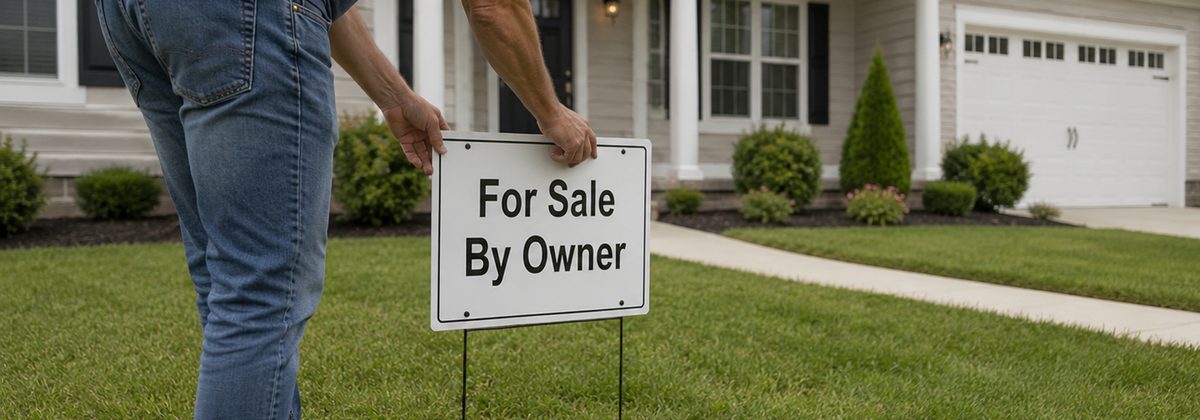
Only about 5% of home sales nationally were FSBO over the past year — an all-time low, down from 10% just a few years ago — as more sellers have leaned on agents to reach a wider pool of buyers and price competitively. Still, plenty of Northern Virginia homeowners consider it, usually to save on commission. This page walks through what's actually involved, so you can make that call with real information instead of guesswork.
Virginia's disclosure requirements
Virginia is a "buyer beware" state, meaning sellers generally aren't required to volunteer detailed information about a property's condition. But there are still real, legally required disclosures every seller — FSBO or not — needs to handle correctly:
The Residential Property Disclosure Statement. Under the Virginia Residential Property Disclosure Act, sellers must provide this state-mandated disclosure to buyers before a contract is ratified. It covers items like pending building code violations, whether the property sits in a dam break inundation zone, and proximity to military air installation noise zones. The form is available through the Virginia Department of Professional and Occupational Regulation (DPOR).
Federal lead-based paint disclosure. If your home was built before 1978, federal law requires you to provide the EPA's "Protect Your Family From Lead in Your Home" pamphlet and disclose any known lead-based paint or hazards, regardless of whether you're using an agent.
HOA or condo documents. If your property is part of a homeowners' or condo association, Virginia law requires delivering specific resale disclosure packets to the buyer, which typically must be requested from the association in advance and can take time to arrive.
Getting your home in front of buyers
The single biggest practical hurdle for FSBO sellers is the MLS. Most serious buyers — and their agents — find homes through the Multiple Listing Service, which automatically syndicates to sites like Zillow and Realtor.com. Listing directly on the MLS generally requires a licensed agent, so most FSBO sellers use a flat-fee MLS service instead. In Virginia, that typically runs $300–$500 for a basic listing, with fuller-service packages (professional photos, pricing guidance, contract support) landing closer to $500–$1,000. Cheaper $99–$150 options exist too, but often come as bare-bones listings with limited photos and support.
Pricing without a comparative market analysis
Pricing is where a lot of FSBO sales run into trouble. Without access to the same sold-comp data agents use, it's easy to price based on Zestimates, online estimates, or "what the neighbor got" — none of which account for condition, timing, or what's actually moving right now. Overpricing leads to a stale listing (and buyers wondering what's wrong with it once you drop the price); underpricing leaves money on the table. If you want a data-backed starting point, our free home valuation tool is available to any homeowner, no obligation attached.
Offers, negotiation, and contract basics
Once an offer comes in, you're the one evaluating financing contingencies, inspection contingencies, appraisal gap coverage, and escalation clauses — and negotiating directly with the buyer or their agent. In a competitive market, buyers' agents know how to structure a strong offer; going in without that same familiarity can mean missing red flags in a contract or leaving negotiating room on the table. Virginia's standard residential contract forms are available through DPOR and various regional Realtor associations, but understanding what each clause actually protects (or doesn't) matters as much as having the form itself.
The closing process
Virginia closings are typically run by a title company, with an attorney supervising document preparation and legal compliance behind the scenes — so you'll still need to line up a settlement agent even without a listing agent. From signed contract to closing table, the average Virginia transaction takes about 30–45 days, covering the title search, appraisal (if the buyer is financing), and final walkthrough. Delays most often come from financing or title issues, both of which an experienced agent is used to spotting and managing early.
The real cost of FSBO
This is the number that surprises most sellers. According to the National Association of REALTORS® 2025 Profile of Home Buyers and Sellers, the median FSBO sale price was roughly $380,000, compared to $435,000 for agent-assisted sales — a gap of about $55,000, or 12.6%. Even after accounting for the commission a seller might save by going FSBO, that price difference often outweighs the savings, especially once flat-fee MLS costs, marketing, and the value of your own time are factored in. It's also worth noting that 60% of FSBO sales in 2025 were to someone the seller already knew — a friend, relative, or neighbor — meaning the "open market" FSBO experience (marketing to strangers, fielding cold offers, negotiating with unfamiliar buyers) is less common, and often harder, than the average FSBO statistic suggests. Want to see how the math plays out for your own home? Try our free FSBO vs. Agent Calculator.